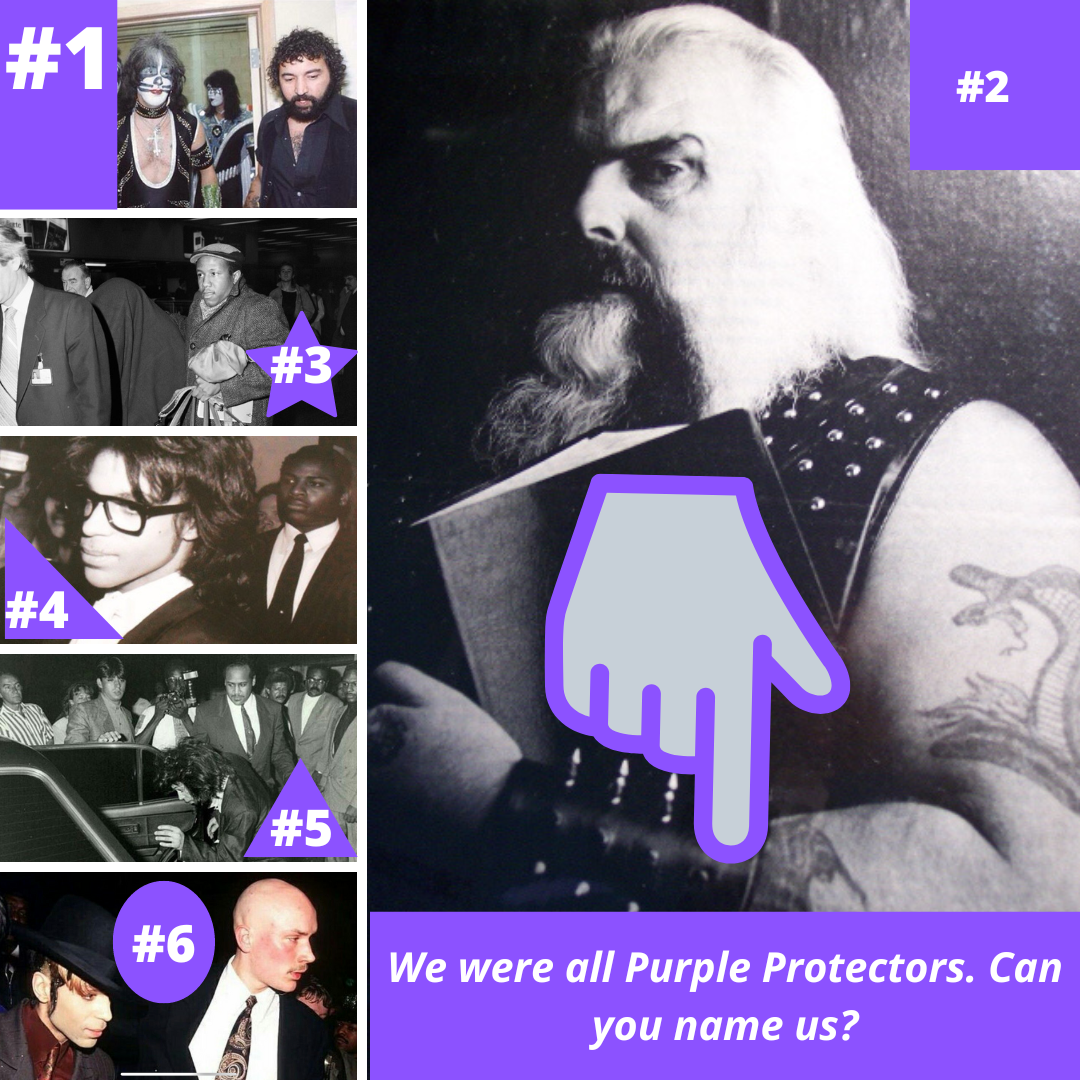

In January 1985, an incident involving members of Prince’s security team resulted in arrests following a confrontation with photographers. Over the years, the story has been told largely through headlines and secondhand accounts.
I was there.
This wasn’t something I read about later or heard through rumor. It happened in one of Prince’s favorite places to visit during the 1980s, at a time when he was at the height of his visibility and scrutiny. What follows is not an attempt to dispute history—but to add context, accountability, and lessons drawn from lived experience.
This story matters not only to Prince fans who care about accuracy, but also to new and experienced protectors who need to understand that executive protection has boundaries—and consequences.
The Reality of Prince and Photography in the 1980s
To understand how that night escalated, you have to understand Prince’s relationship with photography during that era.
Prince did not enjoy having his picture taken casually or without control, particularly offstage or in private moments. Paparazzi culture in the 1980s was very different from today. Photographers used film cameras, which meant once an image was taken, it physically existed and could be distributed without oversight or consent.
There were occasions when we were instructed to retrieve film from photographers. At the time, this was viewed as a way to protect Prince’s privacy and prevent unauthorized images from being circulated. It wasn’t about intimidation—it was about control in an environment that often felt invasive and disrespectful.
That instruction, combined with pressure, youth, adrenaline, and a belief that the protection mission justified aggressive action, became the spark.
What felt routine escalated quickly.
And it shouldn’t have.
What Prince Later Acknowledged in “Hello”
Sometime later, Prince addressed this tension directly in his song “Hello.” While the song isn’t a detailed retelling of the incident, it captures the frustration and intrusion that surrounded moments like that night.
Prince described how abruptly privacy could be violated:
“’Til a camera tried to get in my bed…”
That line wasn’t abstract. It reflected a real experience—photographers pushing beyond boundaries, treating access as entitlement.
He also captured how confrontational those encounters could feel:
“No introduction, ‘How you been?’
Just, ‘Up yours, smile, that’s right, you’re a star.’”
There was no respect. No pause. Just demand.
And then Prince drew a distinction that mattered deeply to those of us around him:
“You call ’em bodyguards, but I call ’em my friends.”
That line wasn’t about authority or toughness. It was about trust. We weren’t hired muscle in his eyes—we were people he relied on to create space and safety in a world that rarely offered either.
But here’s the truth we had to learn the hard way:
Understanding why something happens does not justify how it happens.
Prince acknowledged the emotional reality. The law, however, does not bend for emotion.
The Hard Lesson We Learned Early
At that point in our lives, we were young and operating with limited perspective.
We believed the protection mission had no limits.
That night taught us otherwise.
Executive protection does not place anyone above the law. We were not law enforcement. We did not carry legal authority beyond that of private citizens. And intentions—no matter how loyal or protective—do not erase consequences.
That realization came fast.
It was humbling.
And it was necessary.
What We Would Do Differently Today
Experience brings restraint.
Looking back now, the lessons are clear:
De-escalation beats confrontation
Movement beats engagement
Distance beats dominance
Judgment beats strength
Public confrontations almost always lose
Protection is not about force. It’s about foresight.
A protector’s job is to reduce risk—not create legal exposure for themselves or their principal. The best outcome is the one that never becomes a headline.
Why Legal Readiness Matters in Executive Protection
That night stayed with me.
It’s one of the reasons I later wrote about legal readiness in executive protection. Tactical skill without legal awareness is dangerous—not just to the protector, but to the client as well.
Protectors must understand:
Use-of-force laws
Civil and criminal liability
How optics affect outcomes
When disengagement is the safest option
I explored this further in Legal Readiness in Executive Protection, where I break down why legal discipline is just as important as situational awareness:
https://bodyguardinsider.substack.com/p/legal-readiness-in-executive-protection
Legal readiness isn’t optional. It’s foundational.
Why This Story Still Matters
For Prince fans, this moment offers insight into the pressure surrounding him and how security practices evolved during that era. Mistakes were made, lessons were learned, and standards improved.
For protectors—especially those just entering the field—it serves as a warning:
You can be loyal, committed, and well-intentioned—and still be wrong.
Learn From Our Mistakes
That incident taught us early that authority does not come from proximity to power.
It comes from:
Discipline
Restraint
Accountability
Respect for the law
The goal of executive protection is safety—not ego, not control, and never immunity.
That lesson came early for us.
It’s one every protector should learn—without having to learn it the hard way.