Archive for the ‘Book of the Month’ Category

Written on November 11th, 2008 by Hucky

Book of the Month

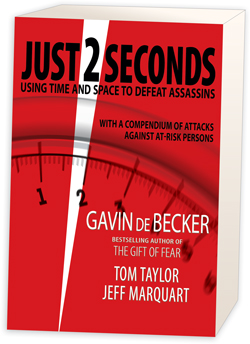
Just 2 Seconds

By: Gavin de Becker

Review By: Bruce Alexander from Executive Protection News

I just finished reading “Just 2 Seconds” by Gavin De Becker, Tom Taylor and Jeff Marquart. If you had to buy only one book this year on executive protection, this is it. Part philosophical, part practical, part tactical, part academic and part historical, “Just 2 Seconds” covers the essence and essentials of preventing an attack on a principal.

The book has three main themes. The first theme addresses attack methodologies from the perspective of how time, distance and space impact both the attacker and the protector. This sets the basis for the second theme which is how to implement preventative strategies and techniques which capitalize on the attackers’ limitations as manifested by time, distance and space. The third aspect of the book is a “compendium” of attacks that is probably the single most comprehensive collection of various criminal and terrorist attacks relevant to executive protection.

The book reflects the thorough research which has come to characterize books written by Gavin De Becker. This trait is most evident in the attack compendium. The attack compendium is an excellent collection of various attacks that have occurred around the world. What is particularly unique about this section is that various attack methodologies are depicted which are then cross referenced by the authors to illustrate either preventative or protective measures which had an impact on the attack. Not every attack is directly related to executive protection however this does not diminish the value of the book since there is a learning lesson associated with every example.

The book also contains additional material which by itself, is worth the price of the book, De Becker shares  various forms and techniques that his firm uses when providing executive protection. The form he provides to his clients regarding how they should conduct themselves in regards to crowd situations is an exceptional resource. There are also several practical executive protection techniques that his firm uses which are worth replicating.

Between the advice, techniques, examples and case studies, this book would be a bargain at twice the price. My only complaint about the book is that I didn’t write it.

Bruce Alexander

Written on October 14th, 2008 by Hucky

Book of the Month

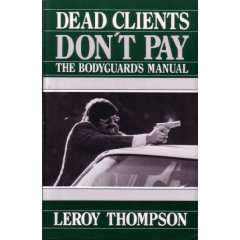
“DEAD CLIENTS DON’T PAY”

by Leroy Thompson Paladin Press, 1984 120 Pages

This book is certainly dated, but has some good information. It has somewhat more fluff than substance, but is an entertaining read. Topics related to bodyguarding include: protecting and securing the home, office, and automobiles, threat assessment, weapons and tactics. There’s alot about the “perks” of this type of work, and the author highlights the glitz and glamour of the job. A good primer for someone curious and looking for an overview of the profession.

Written on September 16th, 2008 by Hucky

Book of the Month

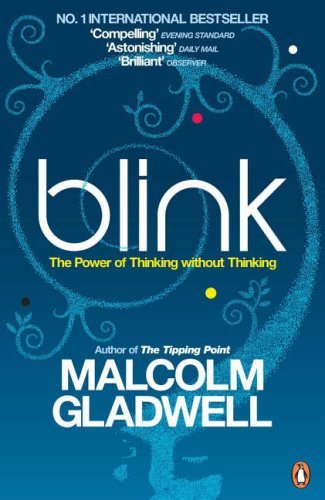
BLINK: The Power of Thinking Without Thinking

by Malcolm Gladwell

Published by Alan Lane, 2005

288 Pages

This book is a good read because it talks about things that you don’t necessarily “learn” in training programs–but rather is something that you need to develop for yourself. This book is about making important decisions based on experience, intuition and intelligence–all within the “blink” of an eye!Gladwell calls this process “Rapid Cognition,” and as he says on his website, he doesn’t ever actually use the word “intuition’ because that suggests something on an emotional or gut level–something almost “not rational.” He believes those first few seconds are actually perfectly rational–just thinking at a faster rate. This idea is something that is a core characteristic to achieving success in Executive Protection, and makes for a fascinating read!

Here is an excerpt from the book:

Imagine that I asked you to a play a very simple gambling game. In front of you, are four decks of cards–two red and two blue. Each card in those four decks either wins you a sum of money or costs you some money, and your job is to turn over cards from any of the decks, one at a time, in such a way that maximizes your winnings. What you don’t know at the beginning, however, is that the red decks are a minefield. The rewards are high, but when you lose on red, you lose a lot. You can really only win by taking cards from the blue decks, which offer a nice, steady diet of $50 and $100 payoffs. The question is: how long will it take you to figure this out?

A group of scientists at the University of Iowa did this experiment a few years ago, and what they found is that after we’ve turned over about fifty cards, most of us start to develop a hunch about what’s going on. We don’t know why we prefer the blue decks. But we’re pretty sure, at that point, that they are a better bet. After turning over about eighty cards, most of us have figured the game out, and can explain exactly why the first two decks are such a bad idea. This much is straightforward. We have some experiences. We think them through. We develop a theory, and then finally we put two and two together. That’s the way learning works. But the Iowa scientists did something else, and this is where the strange part of the experiment begins. They hooked each gambler up to a polygraph–a lie detector machine–that measured the activity of the sweat glands that all of us have below the skin in the palms of our hands. Most sweat glands respond to temperature. But those in our palms open up in response to stress–which is why we get clammy hands when we are nervous. What the Iowa scientists found is that gamblers started generating stress responses to red decks by the tenth card, forty cards before they were able to say that they had a hunch about what was wrong with those two decks. More importantly, right around the time their palms started sweating, their behavior began to change as well. They started favoring the good decks, and taking fewer and fewer cards from A and B. In other words, the gamblers figured the game out before they figured the game out: they began making the necessary adjustments long before they were consciously aware of what adjustments they were supposed to be making.

Written on August 12th, 2008 by Hucky

Book of the Month

SECRETS OF SURVEILLANCE

A Professional’s Guide to Tailing Subjects by Vehicle, Foot,

Airplane, and Public Transportation

by ACM IV Security Services

This is the best book I have ever read on Surveillance and Counter-Surveillance.

It covers topics like: “What are the best practices when acting as a Surveillance Agent.”

A good surveillance person someone who, if observed at a party or in a bar, would just slip into the crowd; he might not be noticed all night. The book gives tips on how to succeed performing this type of detail.

“Secrets of Surveillance” deals with conducting surveillance and counter-surveillance using your feet, ingenuity, your surroundings, and more. It explores surveillance team dynamics, and how best to orchestrate foot and vehicle surveillance.

Today, you can attend courses, purchase videos, even train online to learn the basic principles of surveillance and counter-surveillance.  Even with all the fancy new gadgetry and instruction available–surveillance, like undercover work–is an art. Most agents can learn to do these tasks; however, many experts in these fields believe the best surveillance, counter-surveillance, and undercover people seem to just have a natural knack for it. Almost as though they were “born to do it.” I tend to agree with the experts.

But don’t let that discourage you from learning all you can! It just means you may have to work a little harder at it. This book is a great resource. I highly recommend it.

REVIEW BY JAMES DEVINO

Written on July 8th, 2008 by Hucky

Book of the Month

The Book of the Month for July is Gavin de Becker’s bestselling book “THE GIFT OF FEAR.”

De Becker’s book was published in 1997, (387 pages, Hardcover) and made the New York Times bestseller list for four months. Since that time, it has been published in 13 languages and in 2006 an abridged Audio CD was produced. (FYI For those of you who don’t like to read!) It has been endorsed by every major women’s magazine, and has been featured numerous times on the Oprah show and other television programs. Time and Newsweek has also run stories on the book.

The book’s primary purpose is to demonstrate through stories (drawn from De Becker’s life and his decades studying violence) that violent acts are NOT random and unpredictable. He believes there are distinct warning signs–we just need to learn to see them and appropriately decipher these signs.

Specific topics “THE GIFT OF FEAR” addresses:

* Recognize the survival signals that warn us about risk from strangers

* Rely on their intuition

* Separate real from imagined danger

* Predict Dangerous Behavior

* Evaluate whether someone will use violence

* Move beyond denial so that their intuition works for them

ALSO included are “higher-risk” situations and solutions:

What is the best way to respond to threats?

* Will the employee I must fire react violently?

* How should I handle the person who refuses to let go?

* What are the dangers posed by strangers?

* How can I help my loved ones be safer?

This book is a must-read for anyone in the Executive Protection field, and one to share with clients so they can help you to protect them!