

Nine Things all Bodyguards Should Consider with Regard to Physical Fitness

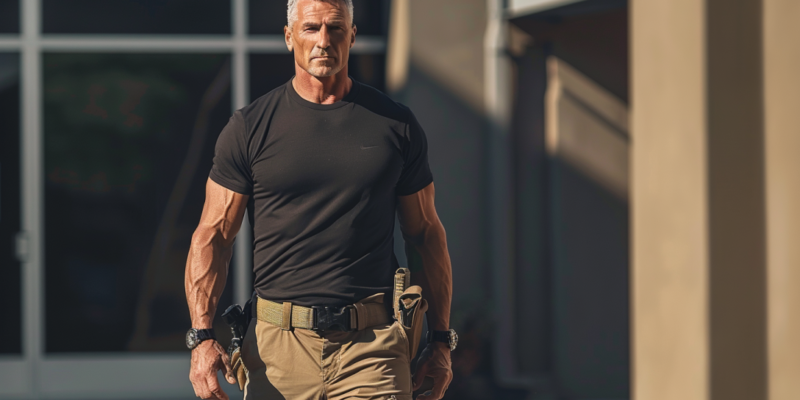
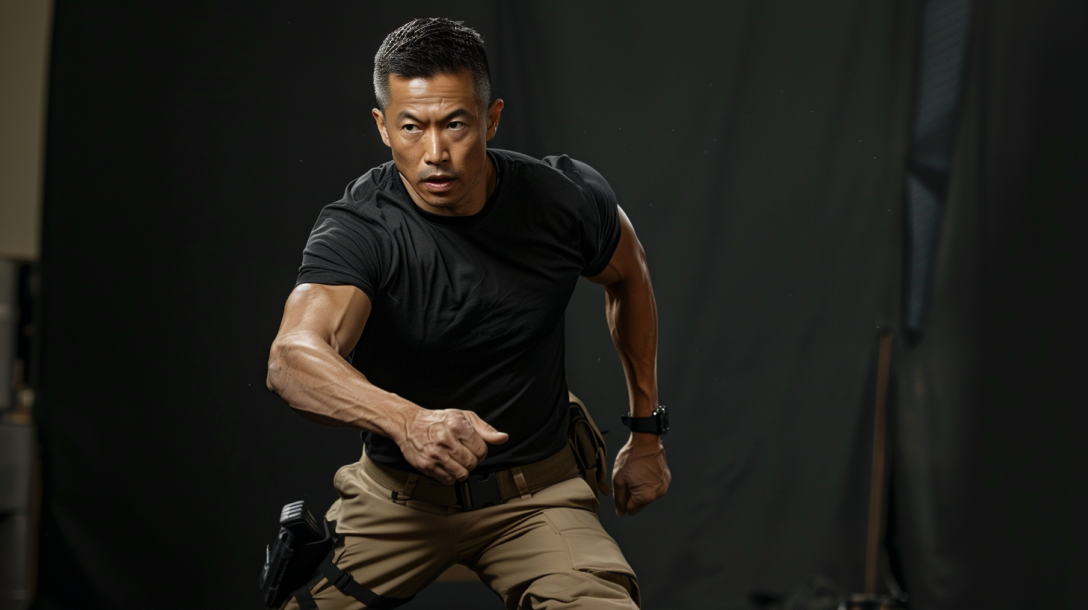
The single most important factor related to being a successful bodyguard is good health. No one will hire an unhealthy bodyguard. Bodyguards with low fitness levels have been shown to be two times more likely to die earlier than their fit counterparts. Therefore, physical fitness is essential to the job and it attenuates the age-associated decline of bodyguard skills and job performance.  It is my experience that increased fitness levels in the industry are also directly associated with higher income levels. Whether you are a male or female bodyguard your goal should be to look and feel healthy and fit.

 Bodyguard Exercise Program

It does not matter what your current fitness level is as a bodyguard you must do some type of moderately high intensity cardio exercise (brisk walking or jogging) for 30 minutes five days a week to keep your heart and lungs healthy, strength training (weights or bodyweight exercises) three times a week to prevent loss of muscle mass and stretching exercises to make your daily strenuous bodyguard activities easier.

The Job Never Gets Easy, You Become Stronger

In reality the job never gets easy, you just become stronger through cardio exercise and strength training. You should consult your doctor before beginning any new exercise or nutrition program.  You need to make a commitment to your physical health and improving your mental state to have the proper self-image that is imperative for the bodyguard operating in today’s industry. Be devoted to exercising your body, feeding and resting it well. Keep a daily exercise log of your progress so that you can stay on track and see how far you’ve come to in your bodyguard fitness program. If you don’t keep track of your progress, how do you know if you are succeeding in meeting your goal?

The Bodyguard Diet

Bodyguards whether on assignment or off-duty should eat healthy diets; this includes vegetables, fruits, lean beef, poultry and fresh fish.  You should also drink lots of water throughout the day to keep hydrated and decrease hunger. On the job or during your down time avoid getting very hungry. I know for a fact that missing meals happens all too often while providing bodyguard services. To avoid hunger on the job carry nuts, seeds, fresh or dried fruit and/or high protein beef or ostrich jerky with you for healthy snacks. Avoid processed foods, those foods that come in boxes, cans and packages.  They are loaded with preservatives and other chemicals.  .

Vitamins & Supplements for the Bodyguard

As bodyguard you should be utilizing some supplements incorporated into your new eating and training program. Most bodyguards take vitamins, minerals and dietary supplements to look and feel younger. The following supplements are I use, when I use them and what benefits they bring. Protein intake for bodyguard doing moderately high intensity cardio five days a week and strength training three times a week is important for rebuilding muscle once the muscle has been broken down from working out. A high-quality protein shake will help your body recover and rebuild quickly. Branched chain amino acids capsules further aid in muscle recovery and reduce fatigue when working out and on the job. I recommend consuming 3 amino capsules before and 3 capsules immediately after your workout for best results.  Multivitamins are necessary for the proper functioning of a healthy body and mind.  Multivitamin capsules provide you with a broad spectrum of coverage; ensuring all your nutritional needs are met.

Working Out On-the-Job

While on assignment the bodyguard should get up early in the morning each day and go to the hotel gym. Do some moderately high intensity cardio exercise for 30 minutes and 45-60 minutes of strength training (weights or bodyweight exercises). When exercising on assignment the bodyguard should accomplish two things through the course of training. First, you want to make sure you preserve the strength and cardio fitness levels that were obtained during your downtime. Second, you want your body to fully recover from each and every workout.

Sample Basic Bodyweight Workout

The following is a good basic bodyweight exercise program that you can do in your hotel or at the hotel gym while on assignment: 1) Chest exercise; decline pushups, 2) Back exercise; pull-ups, 3) Leg exercise; squats, 4) Triceps exercise; bench dips, 4) Biceps exercise; chin-ups and, 5) Abdominal exercise; sit-up. All exercises should be done for 10-15 repetitions for 3 sets each exercise.  After the bodyweight exercise workout do 30 minutes cardio exercise (brisk walking, jogging, stationary bike or jump rope). 

Workout Recovery

Recovery when working out on bodyguard assignments is a very important element in regards to your bodyguard performance and energy levels. After working out your body is primed for absorbing nutrients. For optimal recovery from your workouts you should eat a large serving of carbohydrates as well as a protein, branch chain amino acids and vitamins. Your post workout recovery meal should be used to reduce muscle soreness, rebuild your muscle tissue and prevent any inflammation. Meals should consist of lean protein sources, vegetables and fruit. 

Peak Bodyguard Performance

Your goal as a bodyguard is to make sure your body is not inhibited in any way when you perform your bodyguard duties. Here are some suggestions for good recovery after your workouts. 1) Ten minutes of stretching; this will allow a good stretch for your muscles which helps recovery, 2) Ten minutes in an ice bath; this allows your body to revitalize and aids recovery of muscle tissue. If no ice bath is available a cold shower is an acceptable alternative as cold water stimulates muscle tissue makes them stronger and, 3) Foam rolling; foam rolling each muscle at the point origin to insertion, will aid in the recovery procedure. After each workout make sure you are fully focused on supporting the recovery process.

Investing in Yourself

If you invest your time in a good workout program then you will have the physical capabilities of a serious bodyguard. You will physically separate yourself from other bodyguards in the industry. You can have results or excuses, not both. It is up to you to live a healthy and productive lifestyle as a bodyguard and be disciplined physically and mentally for the job. Bodyguards who are healthy in body, mind and spirit can function at their peak no matter what their age. Keep safe and God speed.


About Doc Rogers: He is the author of best seller Corporate Executive Protection – A Manual for Inspiring Corporate Bodyguards and the newly released eBook entitled How to Build Your Own Executive Protection Business.  Doc is president and CEO of International Corporate Executive Protection Ltd., has earned a Ph.D. in Security Administration from Southwest University, is a Certified Protection Specialist from Executive Security International, a decorated former veteran police officer and is SE Asia’s leading expert on executive protection and corporate security.

How to Choose the Right Bodyguard Assignment

BodyguardsIt’s your responsibility to educate yourself on choosing the right bodyguard assignment that is right for you. You need to have the ability to say “no” and not go after particular bodyguard assignments that aren’t rights for you and your bodyguard future. You should keep the following in mind:

 The Client Profile

Look for the right assignment with the right client for your skill set and relative to your bodyguard career goals. For example, you wouldn’t want to go on a bodyguard assignment with a principal who is a heavy metal rock artist known for numerous brushes with the law and illegal drug use if your ultimate goal is getting into executive security; bodyguarding CEOs of multi-national corporations. It’s just not a good fit for your career ambitions with too many negatives involved. You don’t want to risk your future career reputation bodyguarding sleazy clients, give it a pass, you don’t have time for games, keep focused on your mission.

The Team Profile

The majority of the bodyguard assignments you will go will have team members who are principled, loyal, dignified and professional. However, there still are a few bodyguard teams in the business that have members without honor, respect, personal commitment or discipline. You do not want to be on such a team such. Instead look for teams who value trust, respect, solidity, professionalism and loyalty. Avoid ‘cowboy teams’ with no honor code or mutual respect at all costs. You’ll be glad you did.

 Your Position on the Team

Look for the right assignment with the right position for your skill set and relative to your bodyguard career goals. For instances, if you are just starting out in the bodyguard industry you should ask yourself do I have the required skills at this stage of my career?  For example, the principal wants you to conduct a three country advance to include: 1) Entry/Exit airport surveys, 2) Responsible hospital surveys, 3) Hotel surveys, 4) Safe heaven surveys, 5) Venue surveys and, 6) Route surveys. You should not bother applying if you don’t have the required skills to conduct these assignments in a professional manner.  Remember, the skill level required to be hired depends on the job and expectations.

However, as a rule advance work is a craft that needs to be studied, practiced and mastered. To succeed as an advance man in the bodyguard business you must have the ability to do the job well and the potential to do the job great. Keep studying your craft, build your confidence and keep focused. You don’t get paid good money for something that does not require training and expertise. This is not to discourage you, just trust your abilities and make sure you are ready and fully prepared for the particular assignment. When you are ready, you’ll know it and will accept the position with complete confidence in your ability.

What Teams Look for in Prospective Bodyguards?

Teams on the circuit look for prospective team members who are professional and pleasant, someone who has a good understanding of the business and fits in with the other members on the team. This also means knowledge of the principal and the culture of the company. They will also look for industry experience and training, someone with good people skills, widely trusted, keeps confidences, doesn’t blame others for his own errors and keeps clear moral and ethical boundaries when bodyguarding principals. Get trained in the specific skills and knowledge you may be lacking, be persistent, proactive and sets high standards for yourself and your bodyguard career. Some things new bodyguards need to work on is paying attention to details, being open to criticism and applying good listening skills at all times. It is strongly recommended to work on any of these skills you may be deficient in every day. Bodyguard candidates usually score higher on interviews with teams on the circuit when they have these characteristics. Good luck and God speed.

About Doc Rogers: He is the author of best seller Corporate Executive Protection – A Manual for Inspiring Corporate Bodyguards and the newly released eBook entitled How to Build Your Own Executive Protection Business.  Doc is president and CEO of International Corporate Executive Protection Ltd., has earned a Ph.D. in Security Administration from Southwest University, is a Certified Protection Specialist from Executive Security International, a decorated former veteran police officer and is SE Asia’s leading expert on executive protection and corporate security.

How to Observe & Avoid Threats against the Principal

Executive SurveillanceBy Doc Rogers

The most successful bodyguards keep their principals away from any known or possible threats through avoidance, staying alert at all times and being aware of their environment.  Threat prevention methods against your principal place a significant importance on observation skills; keeping a constant state of vigilance, noticing suspicious actions of others, anticipating and avoiding possible danger at long, medium and short range.

Executive Surveillance

Executive surveillance is a term used to describe a specially planned, organized and goal-oriented activity to detect the absence or presence of potential threats in your general area. The difference between executive surveillance and ordinary protective observation is that surveillance follows an objective for keeping your principal safe through a detailed observation plan that follows a precise method. The disciplines for executive surveillance described below are for bodyguards working solo or on a team. The development of disciplines for executive surveillance is an easy skill to acquire and should become an essential part of your “radar and warning device” to avoid threats before they have a change to occur. These techniques are novel, and executive protection specialists and corporate executives should absorb their safety merits for threat avoidance. 

Categorizing the Severity of the Threat

The process is about categorizing the severity of threats in the area to determine a response. This includes: 1) Watching for people loitering in the area, 2) Obtain ongoing assessment of information in the area; this information provides an immediate threat feedback loop, 3) Keeping aware of people watching you and your principal, 4) Being keenly aware of groups of three or more persons on “triangulation surveillance” (surveillance from three or more location viewpoints relative to your location utilizing three or more surveyors), 5) Avoiding strangers getting too close to your principal, 6) Avoiding vehicles getting too close to your location while on foot (one car distance away is considered too close),  7) Seeing if there are any trends or patterns occurring in the area, 8) Formulating an immediate response plan for certain situations in advance, 9) Preparing to retreat to a prearranged safe haven and 10) Arriving at the designated location in a safe and controlled manner.

Executive Surveillance Techniques

Bodyguards should use the following threat prevention surveillance techniques; start purposefully observing the immediate area in a systematic manner. Before you can accurately assess when someone is a potential threat, you need to have a recognized standard of what is considered safe and normal. Observe what the normal behavior is for the people and activities within the area. After you know what is normal, look for people who are demonstrating wrong behavior. 

Close Distance

Begin with the areas closest to your principal, keeping your awareness focused 360 degrees. Close risks represent the highest threat and give you less reaction time. Your executive surveillance should be within arm’s reach up to 20 feet away. Assess the area. Don’t just take a casual look around; make a mental list of everything you see. Don’t simply skim over the area. Be protective of the immediate area around you. If an individual suddenly enters your immediate (intimate) zone, react instantaneously. Here are distances you should gage:

Individual Distances

This does not apply to all culture-specific or country-specific locations and is used for executive orientation only:

Intimate Distance

The intimate distance is from 0 inches to 18 inches. This is a private zone for lovers, close friends and children holding on to their parents.

Personal Distance

The personal distance is from 1.5 feet to 4 feet. This is a comfortable zone for talking at a party. The individual is kept at arms’ length.

Social Distance

The social distance is from 4 feet to 5 feet. You are most likely to transact interpersonal business – talking to a client within this zone.

Moderate Distance

After the immediate areas have been checked, it’s time to move your executive surveillance to a moderate distance. Moderate risks represent the second highest threat to an executive as they give you only a moderate reaction time. Keep your awareness focused 360 degrees. Your executive surveillance should be within 20 feet to half a city block away.

Far Distance

After the moderate areas have been checked, you should start scrutinizing far distance surveillance. Far distance risks give you more time to develop a plan of action. Again, keep your awareness focused 360 degrees. Your awareness should be within half a city block to a full block away or further.

Repeat the Surveillance Cycle

After each distance has been observed you should monitor each area for potential risks with overlapping intervals of close, moderate and far awareness. You should make a mental note of any changes to any areas of interest and immediately place them under suspicion and alert the rest of the team. Keep safe and God speed.

About Doc Rogers: He is the author of best seller Corporate Executive Protection – A Manual for Inspiring Corporate Bodyguards and the newly released eBook entitled How to Build Your Own Executive Protection Business.  Doc is president and CEO of International Corporate Executive Protection Ltd., has earned a Ph.D. in Security Administration from Southwest University, is a Certified Protection Specialist from Executive Security International, a decorated former veteran police officer and is SE Asia’s leading expert on executive protection and corporate security.


How to Apply for a Bodyguard Job

Bodyguard header 1How to Apply for a Bodyguard Job

By Doc Rogers

The following are successful strategies and techniques for making a positive impression when applying for a bodyguard job and during the interview.

Get Prepared

Find out as much as possible about the corporation or the affluent person that is in need of bodyguard service. This should be done through researching newspapers, magazines and websites. Your preparation will tell prospective employers that you are interested, thorough and prepared for the job.  Once you have done your research and have found a select group of corporations or the affluent people that may be interested in your bodyguard services mail them your cover letter and résumé. This is called targeted mailing. Prior to receiving a call for an interview get prepared as much as possible.

Dress Code

Your dress code should be that of a professional, this means formal business attire; a sharp dressed professional in every sense of the word.

During the Interview

No one likes to see mean looking bodyguards with scowls on their faces, so remember to smile to make a good first impression and influence the hiring decision. Also maintain eye contact with your interviewer and provide eager responses when applicable. Show the interviewer that you are a go-getter, one that has education, intellect and ability.  To accomplish this during the interview not only should you answer key questions with confidence, you should be ready to ask a few key questions as well.  Ask two or three questions about security issues you have researched.  This will demonstrate your knowledge and intelligence about the employer and don’t forget to write-down the interviewer’s answers in your notebook. Never talk negatively about former employers, your goal is to maintain a positive attitude to show the interviewer that you have the ability to get along and you’re a team player.

Goal of the First Interview

Usually during the first interview you will not be given a job offer. Therefore, your goal at the first interview is not to get a bodyguard job offer, but to get called back for a second interview. At the end of the first interview ask the interviewer for the next steps. Do not take “We’ll call you know.” Show your enthusiasm, let interviewer know that you are interested in the position, and always inquire about the next steps in the process so you may professionally follow-up.  After each interview send thank-you card as soon as possible. Mention each person with whom you met during the interviews. Be sure your thank-you card is professional. Send the thank-you card via e-mail or overnight courier.

Use Your Resources

Use any contacts or references that may impact the hiring decision in your favor. This could be someone who actually knows the employer or the interviewer.  It never hurts to ask your contacts or references put in a good word for you after the first interview.

Recommendations for Applying in Person

Recommendations for applying in person: 1) Always be on time for any appointment (10-15 minutes early), 2) Be polite and humble, 3) Remove your sunglasses, 4) Bring your résumé, 5) Print neatly within the lines on the application, 6) Dress appropriately and look your absolute best and, 7) Run your job applications and the interview process like a business. Don’t make any negative comments, leave your ego at the door and you’ll become a success. Good luck and God speed.

About Doc Rogers: He is the author of best seller Corporate Executive Protection – A Manual for Inspiring Corporate Bodyguards and the newly released eBook entitled How to Build Your Own Executive Protection Business.  Doc is president and CEO of International Corporate Executive Protection Ltd., has earned a Ph.D. in Security Administration from Southwest University, is a Certified Protection Specialist from Executive Security International, a decorated former veteran police officer and is SE Asia’s leading expert on executive protection and corporate security.


728-90

How To Break Into The Executive Protection Industry

Executive ProtectionExecutive Protection

INTRODUCTION

Breaking in the executive protection industry can be difficult and challenging. Fresh graduates from executive protection academies believe all they need is an executive protection diploma to become successful in the industry. Landing contracts and obtaining work in the executive protection business is a skill. This article is going to show you the techniques you need to land contracts and get hired in the executive protection trade.

REALITIES OF THE TRADE

Selecting a career in the executive protection industry is exciting. However, fresh out of the academy rookies have the perception that the job provides glamour, recognition and fortune and bodyguards live an electrifying, fashionable and jet set lifestyles. In reality the industry involves a lot of hard work, dedication, time-critical decisions and long hours. Rest assured there is plenty of work in this industry if you have the determination, commitment and are prepared to put in the focused efforts required.

HOW THE INDUSTRY WORKS

In order to succeed in the industry you need to know how it functions and how and where to find executive protection contracts and employment opportunities. The majority of executive protection contracts are short assignments of one to two weeks duration. Permanent executive protection positions are difficult to obtain, but not impossible. This is because executive protection personnel who have permanent positions don’t give them up easily. Most of the contracts within the industry are based on being a vendor or sub-contractor for executive protection firms as well as corporate executive protection units (EPUs). Although the executive protection industry is global in nature, it’s still relatively small. Networking, word of mouth, reputation and credibility are heavily relied upon to get assignments. To get onboard as a vendor with executive protection companies and corporate EPUs you must fit the profile of a professionally trained, discreet, team player.

WHAT TO EXPECT

You have to be well-organized and pay attention to detail. As a bodyguard you must be able to give orders and follow orders, work long and irregular hours without complaining and be able to provide top-notch, internationally accepted bodyguard techniques. This means performing your protective duties discreetly, adroitly and with complete assurance.

POSITIONS MAY VARY

On some assignments your position on the team may vary. One week you may be on the close protection team, the next week you may be on the principal’s baggage security team riding in fright elevators and in luggage deliver trucks. After that you may be assigned on the halls and walls detail guarding a hotel suite while the principal sleeps. Remember you are being tested on all aspects of the bodyguard trade when you first begin. Do not complain about any position. Gladly accept all positions and learn every facet of the job, because your professional behavior is also being tested at this stage of your career.

BE WILLING TO WORK YOUR WAY UP

The most popular way of entering the executive protection industry is by starting out as a halls and walls agent and to advance from there. If you take the halls and walls position seriously and act professional you may find yourself on the close protection team guarding the principal sooner than you expected. However, close protection positions are attainable typically on the basis of executive protection experience, training and qualifications. This is why you must be continuously developing your executive protection skill levels. Training is your fast track up the executive protection ladder and will propel you to where you want to be. You need to take a long-term interest in your executive protection career development. Keep Safe & God Speed.

Doc Rogers


728-90