

Want to be a Bodyguard? First, Nail the Interview!

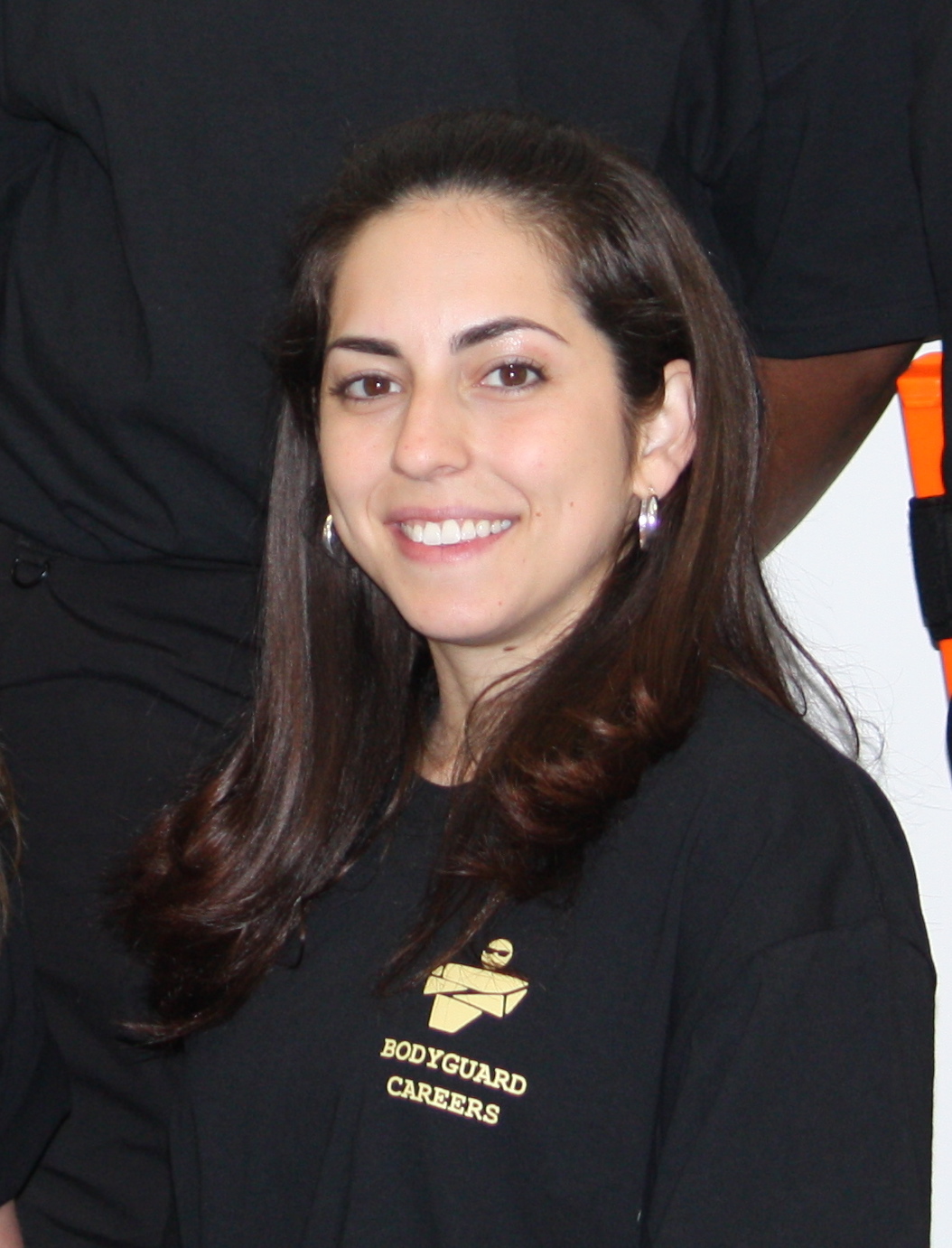
One of several Female Executive Protection candidatesBy Ed Hinman

As the Director of Recruitment and Selection for an international private security firm, I’ve interviewed thousands of candidates — and I’ve hired hundreds of them for a career in private security and executive protection.  What matters most to me in hiring a candidate is not their experience (though that matters), what matters most is their behavior.

“Invisible Qualities” Though a resume alone can sometimes earn a candidate an interview, their behavior during the interview is what actually earns them the job.  After all, a resume just indicates your qualifications, i.e. What you are.  The interview, on the other hand, reveals your behavior, i.e. Who you are.  At the private security firm where I work, we call these “who you are” attributes a person’s Invisible Qualities (or “IQs”) – and they mean everything to us.  IQs include a person’s Positivism, Energy, Preparation, Readiness, Willingness, Curiosity, and Integrity.

Just like an actor, a candidate is auditioning for a part — a part that could be a twenty-plus year career.  So like an actor, candidates interested in private security must nail the audition!   Thus, the interview room becomes the stage where all eyes are on the candidate, trying to discover “Who is this person,” and “Are they a good fit for our organization?”

Focus on the Little Things So how can candidates reveal these IQs?  After all, almost every candidate recites those old interviewing clichés like “I’m honest,” “I’m a hard worker,” and “I’ve got a great attitude.”  To separate yourself from the pack, don’t tell the interviewer about your IQs, show them by focusing on the small stuff — as the tiniest details will reveal “Who You Are.”

As an interviewer, my time is limited and I know the candidate is on his best behavior, so I focus on the little things.  If he’s one minute late for the interview, I assume he’ll be twenty minutes late for work.  If his suit is ill-fitting for the interview, I assume he’s sloppy and unprofessional.  The way a candidate does anything, I assume, is the way that candidate does everything.

In determining “who” a candidate is, and if he or she is a good fit for our firm, I seek to answer these questions:

• Does he greet the receptionist? (Positivism, Communication, Manners)

• How does he dress? (Preparation, Attention to Detail, Maturity)

• Is he physically fit? (Energy, Work Ethic)

• Is he fifteen minutes early for the interview? (Readiness, Professionalism)

• Did he read our CEO’s book? (Curiosity)

• Did he research our firm’s mission and culture? (Willingness, Preparation, Grateful for the Opportunity to Interview) • Does he answer our background questions directly, consistently, and without contradiction? (Integrity)

For your next job interview with a private security or bodyguard company, I recommend you focus on these questions and address all the little things (i.e. your actions) that turn your invisible qualities into visible attributes that result in career opportunities as a bodyguard and protection specialist.  In short, don’t tell the security firm you’re professional and responsible — Show them!

Ed Hinman is the Director of Recruitment, Selection, and Training at Gavin de Becker & Associates, a private security firm that advises and protects the nation’s most at-risk public figures and organizations. A graduate of the United States Naval Academy, Mr. Hinman served eight years in the United States Marine Corps before beginning his private security career in Los Angeles, CA.


728-90


Monday Morning Job Tip: Solicit Help from Friends

Solicit Help from Friends

• Let all of your friends, neighbors, people at church, family and old coworkers know that you are looking for a job and tell them to keep their ears open for opportunities.

• Tell them your looking for work in the Executive Protection industry.

• Share with them your skills.

• Let them know what type of client you want to work for.

• Give them a way to contact you (LinkedIn, website or email address)

I look forward to sharing in your success–I know you will find, as I have, that you are on a career path that is both interesting and profitable.

Happy hunting.

Hucky


728-90

What Wikipedia can’t tell you about Executive Protection?

Bodyguard

Learn how to be a bodyguard

Executive Protection

I hate to be the barrier of bad news, but there are no extravagant schemes or methods for earning more money in executive protection; it really comes down to a single thing.  Never cut your rates.  As simple as this one thing sounds, anyone who has been in the executive protection business at all will know there always seem to be compelling reasons to cut your rates but when you do so, you create a landslide of difficulties barring access to increased future earnings.

Most of us have experienced the disappointment of purchasing an item or service at full price only to find the same item from the same provider days later for substantially less money.

When this happens it doesn’t take much to figure out that the seller was offering the item far above market value in the first place.  Whenever this happens you immediately feel taken advantage of.  This is the same thing that occurs in the mind of your client when they realize your rates were always open to a downward adjustment.

This is true when your client is the one who manages to negotiate a better rate with you and when they hear of another client getting a better rate for the same service.

The second problem with cutting your rates is that it sends a signal to your client that you really are not worth the money you charge.  Again, think of this as a consumer.  People who are selling a superior product or service do not have to drop their prices, they know their product is worth the money, and they know their customers will pay a fair price.

This is not arrogance; this is confidence.  Clients may not always enjoy paying for services rendered but they do enjoy knowing they are getting good value for the money they spend on personal protection.  When you stick to your guns you are sending a message to your client that your services are worth every penny of what you are charging.

Another reason for standing firm is that when you agree to accept less for your services you are telling your client you are desperate.  The problem with being desperate is that it indicates no one else would want to hire you.

This is a bad message to send to a client who is counting on you to keep them safe.  It’s a little bit like shopping for a bullet resistant vest and the shop keeper is uncompromising on his price for the first three you look at, but on the fourth vest he is more than willing to bargain.

Anyone who values their life would not pay for the fourth vest, and you would probably not wear it even if the shop keeper was giving it away for free.

The way to fix this problem is to do a good market analysis and price your services accurately for the market you are in.  Write up a solid business plan that explains why you are worth the rates you charge and include honest appraisals of your services compared with the competition within your market.

Bring value to your client and be prepared to explain why you have priced your services as they are.  Try not to be offended when they ask you to justify your fees, this is your chance to shine and let them know what they are getting for their money.

List your certifications and the executive protection schools you have attended.  Explain how your EMT certifications, language skills, marksmanship training, and other acumen benefit them.  Once you determined the fair price for your services stand firm and show your client that you are worth the investment.


Your First Advance

By Doc Rogers

Background: The detail leader is responsible for having advance work (reconnaissance) carried out. He assigns an advance man to gather all pertinent information of the threats and obtain information of the environment in which the client will visit. For the new advance man this may seem like a daunting task. Advance work in general, is technical and highly specialized service. The following recommendations will assist you in accomplishing your first advance work duties with few difficulties, however timely planning is necessary.

Objectives: Your objective as the advance man is to gain foreknowledge, acquired by going to each location in advance to evaluate, analyze and obtain all available information related to the client’s visit to reduce vulnerabilities and improve logistics so the executive protection team members can successfully accomplish their mission.  You are to reduce to a minimum all uncertainties and setup security measures regarding the client’s visit at each location he or she will physically visit. The security measures you setup as the advance man are both active and passive, designed to insure the safeguarding of the client and to prevent needless delays, confusion, etc.

Action: While on advance work duties you do not have time to dillydally. Advance work involves rapid assessment and analysis of current information and prompt delivery of the the advance work you have produced to the detail leader. The advance man must obtain many sources of mission appropriate information in five categories:

Arrivals: Evaluate for security and comfort of movement for the client at entry airports, hotels, venues and safe havens.

Departures: Evaluate for security and ease of movement for the client at exit airports, hotels, venues and safe havens.

Venues: Evaluate for safety and security, movement for rapid evacuation if necessary and client comfort.

Routes: Evaluate for quickest safest and most favorable client vehicular movements; to include secondary routes, travel estimates in time and miles. Learn the status of all routes and avoid those frequently used by criminals. You should include a route map as a source of information for the detail leader for pinpointing all vital locations.

Safe Havens:  Evaluate and setup rally points in case of incident or medical emergency. The safe havens must have favorable safety conditions, excellent communication systems, available 24/7 and with positively identified friendly personnel preferably armed and provide good fortification. Embassies, hospitals, police stations, military facilities and other suitable areas must be carefully evaluated.

[Read more...]

Success vs. Failure in the Bodyguard Trade

By Doc Rogers

Everyday more and more people enter the bodyguard and executive protection industry. However, only a few land lucrative assignments and go on to have successful careers.  What do all successful professional bodyguard and executive protection specialists have in common?

  • Successful professionals see opportunity where others see disappointment.
  • Successful professionals focus on a positive path within the bodyguard industry.
  • Bodyguards that made it big in the industry worked on what they love to do rather than only making money. They knew that money would eventually follow from working on their dreams and aspirations.
  • Successful bodyguards take responsibility for their own life and livelihood.

To become a success in the bodyguard and executive protection trade you have to start thinking and acting different. This means changing your patterns, activities, and your thoughts.

First off, you are going to need to present yourself in a professional manner and do a complete makeover if necessary. The better you look and feel about yourself, the better chances for success.

You are going to have to sell yourself and your bodyguard services.  In this business everything that happens to you depends on you alone. Make it positive by acting well, dressing well and speaking well. The choices you make for yourself also have an impact on your career. This includes the seminars you attend, the articles and books you read, the people you choose to associate with and others you choose to distance yourself from.

Your success in the industry requires lots of actions. Opportunities in the bodyguard and executive protection field exist, but it’s up to you to take action and go after them.  This is the one solution to get on a successful career path.  Starting today, your full-time job is to become a success in the industry.

This will not be easy, you’ll have to put in 10-12 hour days networking, writing cover letters, and sending out résumés, handing out business cards, mailing out “thank you” cards and follow up letters.  You must display confidence and professional polish in all you do. Have a strong personal motivation in mind and body. Calculate every world you speak and every move you make. And develop your own coherent strategy to become a successful.  Stop doing what everyone else is doing and stop walking that common path with your eyes shut and you will have success. To your success and God speed.